
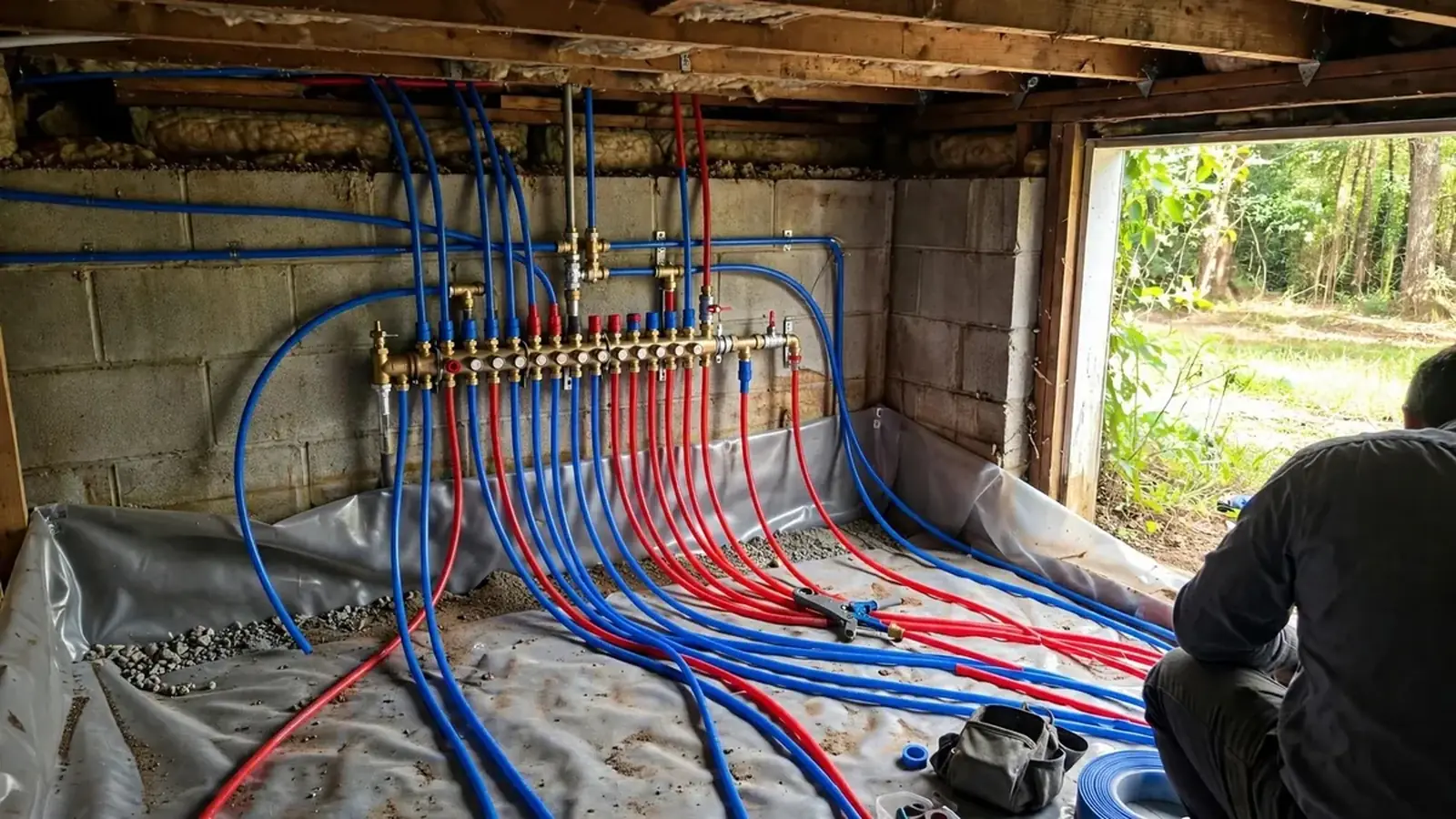
Repiping in Placentia, CA means replacing the supply pipes inside a home that have worn out, leaked repeatedly or lost pressure. It is a planned project, and the 24/7 line at (714) 750-8637 is also open for any leak that cannot wait. A licensed plumber looks at the pipes before anyone quotes a figure.
Repiping is not the same as repairing one leak or replacing the main line from the street. It covers the supply pipes inside the house. The water line repair page covers the service line from the meter to the house, which is a different job.
Signs the pipes inside the house are wearing out
One leak does not mean a house needs repiping. A pattern does. Pinhole leaks in different places, rusty or discolored water, low pressure that gets worse, and repairs that keep failing next to the last one are the usual signs.
When the pipe wall is thin everywhere, patching one spot only moves the failure down the line. The plumber checks the visible runs, the pressure and the age of the home, and tells you whether repair or replacement is the better use of money.
What a plumber looks at before recommending a repipe
- Pipe material. Copper, galvanized steel, PEX and other types fail in different ways, and the plumber identifies what the house has.
- Leak history. Several leaks in a short time point to pipe wear rather than bad luck.
- Water pressure and flow. Low flow at several fixtures can mean corrosion inside the pipe.
- Water color. Brown or orange water that clears after running may mean rust in the line.
- Hidden runs. A moving water meter with every fixture off suggests a leak in a run you cannot see. Leak detection confirms it.
Repair, partial repipe or full repipe
Repiping is not all-or-nothing. The table below shows how the choices usually line up.
| Option | Best when | Watch for |
|---|---|---|
| Spot repair | One leak in a pipe that is otherwise sound | New leaks nearby if the pipe is aging |
| Partial repipe | One part of the house is failing, such as a bathroom group or a kitchen run | Mixing old and new materials needs proper fittings |
| Full repipe | Leaks and low pressure throughout the house | More walls opened and a longer water shutoff |
| Slab-area reroute | A leak under the floor that is hard to reach | Often cheaper than breaking the slab. See slab leak repair |
How a repiping project is planned and carried out
A repipe takes planning because water is off while the work is done.
- 01
Inspection and written plan
The plumber walks the house, identifies the pipe material and explains the layout.
- 02
Price before work starts
You get a clear price, the work scope and the number of access points in the walls.
- 03
Scheduling around the household
The plumber and you agree on a start date and how long the water will be off.
- 04
New lines run and tested
Supply lines are replaced, connected and pressure tested before any wall is closed.
- 05
Patching and cleanup
Access holes are closed, or the plumber tells you who handles the drywall and paint.
What it is like to live through a repipe
Water is shut off during the work, usually for part of each day. Plan for bottled water, a place to shower and a way to cook. Ask the plumber how long the house will be without water on each day, and for the likely number of days.
Walls are opened where the new lines run, which is why many people schedule the repipe with other work. If a bathroom remodel is planned, a repipe can be done first and the walls left open. A new fixture also needs correct supply, which the plumbing installation page covers.
Placentia homes, hard water and pipe life
Placentia's population grew from about 5,000 in 1960 to nearly 25,000 by 1970, so many of its homes are now 50 years old or more. The pipe material depends on when and how each house was built or remodeled, and the plumber identifies it on site. Older neighborhoods near Old Town and Atwood are older still.
Much of Placentia receives water from Golden State Water, whose 2026 report lists average hardness of 188 mg/L, about 11 grains per gallon. About a third of the city is served by Yorba Linda Water District, so check your bill. Hard water leaves scale inside pipes over time, and a water softener can slow that buildup on new lines.
What to do before the repiping crew arrives
A little preparation keeps a whole-house job safe and quick.
- Find the main shutoff. Know where it is so water can be stopped at once if a joint lets go.
- Clear access. Move furniture and boxes from walls, closets and the water heater area where pipes run.
- Protect valuables. Cover or move items near the work, since drywall dust and open walls come with the job.
- Keep children and pets away. Open walls, tools and shut-off water make the work area unsafe for them.
Permits and inspections
Repiping is work the City of Placentia may need to review. The Building and Safety office at (714) 993-8124 publishes a permit form that lists water lines and pipe repair. New piping is installed to the California Plumbing Code, which is based on the Uniform Plumbing Code (UPC).
- Ask the city. Building and Safety can tell you whether your project needs a permit. Do not assume either way.
- Ask the plumber. A licensed plumber explains how permits and inspections fit into the schedule.
- Check the contractor. The California Contractors State License Board lists plumbing as a C36 license and offers an online license check.
- Keep the paperwork. A record of the work helps at resale and with insurance.
What drives the price of a repipe
A clear price is given before work starts. These are the factors.
More fixtures, more floors and longer runs mean more pipe and more time.
Copper, PEX and other materials differ in cost and in how they are installed.
A house with open framing is faster than one with finished walls and tile.
Patching walls is a separate cost or handled by a separate trade.
A partial repipe costs less than a whole house, and the plumber explains the difference.
Repiping for age or wear is not usually covered. Sudden water damage from a failed pipe may be, so ask your agent and keep photos and the invoice.
Want your real number for your house? Call (714) 750-8637
Questions about repiping in Placentia
Repeated leaks in different places, rusty water and falling pressure are the usual signs. The plumber inspects the pipes and says whether repair or repiping makes sense.
It depends on the size of the house and the plan. The plumber gives you the likely shutoff hours for each day before work starts.
No. Repiping covers the pipes inside the home. The line from the meter to the house is covered on the water line repair page.
Yes. A partial repipe covers the section that is failing, such as one bathroom group, as long as the connections to the old pipe are made correctly.
Close the main shutoff and call (714) 750-8637 at any hour. A burst or spraying line is treated as an emergency under burst pipe repair.
Often, when corrosion inside the pipe is the cause. The plumber checks pressure at the fixtures first, because a failing regulator or a partly closed valve can cause the same symptom.