
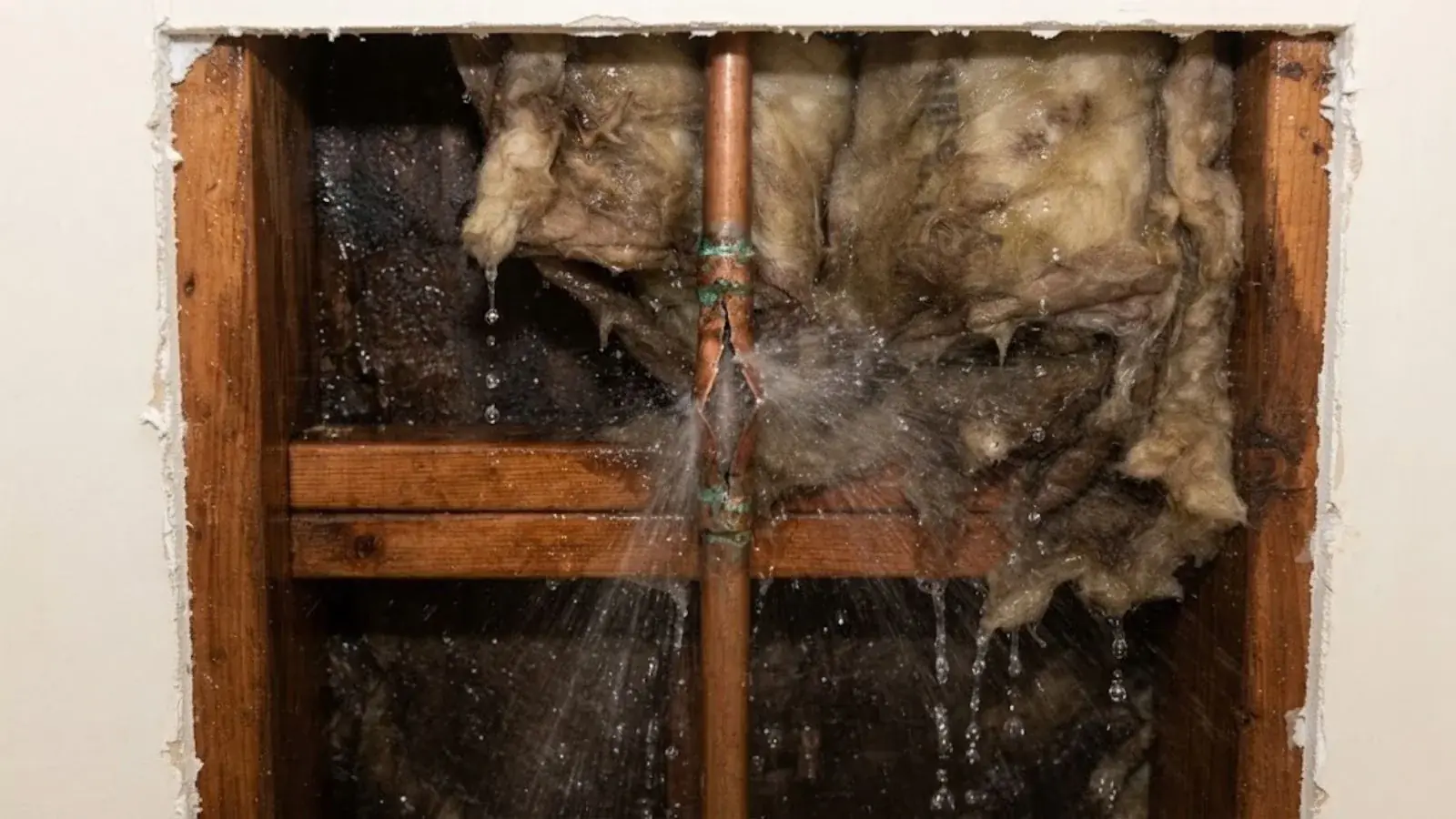
Emergency burst pipe repair in Placentia, CA starts with stopping the water. Close the main valve, then call (714) 750-8637. The line is open 24/7 and a licensed plumber is sent to repair or replace the broken section. If water is near electrical outlets or the panel, keep clear and tell the dispatcher at once.
A burst or cracked pipe is any pressurized line that has split, separated at a joint or blown out. The cause can be age, corrosion, a failed fitting, or physical damage. The repair is straightforward once the water is off and the damaged section is exposed.
A pipe just burst: what to do in the first ten minutes
Speed matters more than neatness. Water damage grows by the minute, and the steps below buy time until the plumber arrives.
Do these in order:
- Close the main water valve. It is usually near where the line enters the house, at the garage wall or by the water heater. Turn it clockwise until it stops.
- Open a faucet low in the house. That drains pressure and water left in the lines so less escapes from the break.
- Turn off power to the wet area. Do this only if the breaker panel is dry and you can reach it safely. Otherwise stay out of the room.
- Move belongings and start containing water. Lift rugs, electronics and paper. Towels and a wet vacuum help until the plumber is on site.
Then call (714) 750-8637. Tell the dispatcher where the water is, whether the main is off and whether any water is near outlets. Photos for your insurer can wait until the area is safe.
Why a pipe bursts or cracks
Pipes fail for a handful of common reasons. Corrosion thins the wall from inside or outside until it gives. A fitting loosens or a solder joint fails. Pressure spikes from a closing valve or a faulty regulator strain weak points. Physical damage from a nail, a shovel or a settling foundation cracks a line outright.
Older homes carry more risk simply because the plumbing is older. Placentia's population grew from about 5,000 in 1960 to nearly 25,000 by 1970, so many homes have fifty-year-old pipe. One burst in an older line often means other sections are close behind, which is worth discussing with the plumber. The repair itself is done to the UPC, the model code that California's plumbing code is built on.
How the repair goes once the plumber arrives
The visit is short when the water is already off, and the plumber explains each choice.
- 01
Confirm the water is off and assess
The plumber checks the main, finds the break and judges how far the damage runs.
- 02
Open access
Drywall, a ceiling panel or a section of crawlspace is opened only as much as needed to reach the break.
- 03
Cut out and replace the damaged section
A new length of pipe and fittings goes in, matched to the line it connects to.
- 04
Pressure test and restore service
The line is tested for leaks, water is turned back on, and you are shown what was done and what to watch.
Quick fix or full replacement: how the plumber decides
Not every broken pipe needs a large job. The choice depends on the pipe, its age and how many weak spots show up.
| Situation | Usual approach | Why |
|---|---|---|
| One clean break in a healthy line | Cut out and replace the damaged section | Fast and cost-effective when the rest of the pipe is sound |
| A joint or fitting failed | Replace the fitting and nearby sections | Restores a reliable connection |
| Several leaks or visible corrosion | Replace a longer run or discuss repiping | Fixing one spot while others fail often means another call soon |
| Break inside a wall or ceiling | Open a small access, repair, then close | Keeps damage limited |
After the repair: drying, documenting and watching for trouble
- Dry the area quickly. Wet drywall, insulation and flooring need airflow, and some may need removal. Mold can start if material stays damp.
- Document everything. Take photos of the break, the damaged pipe and the wet areas, and keep the plumber's invoice for your insurer.
- Watch the meter. After the repair, run no water and check that the meter stays still, which confirms there is no second leak. The leak detection page explains how.
- Ask about the rest of the line. If the pipe that broke is old, ask whether other sections look similar.
Placentia homes and shutoff valves
Knowing your main shutoff before something breaks saves time. Most homes have one near where the line enters, and many have individual valves under sinks and toilets. Find yours, label it and make sure everyone in the home can reach it.
Your water provider depends on your address. Golden State Water customer service is 1-800-999-4033, and Yorba Linda Water District serves about a third of Placentia, so check your bill. If the break is on the street side of your meter, the utility is the contact. A plumber can tell you which side the break is on. For questions on permits, the city Building & Safety Division is at (714) 993-8124.
What shapes the cost of a burst pipe repair
A clear price is given before work starts. These are the factors that move it.
Copper, PEX and galvanized each need different parts and methods.
An exposed line is quicker than one behind a finished wall or under flooring.
A short section is a smaller job than a long run.
Opening and closing drywall or a ceiling is separate from the plumbing.
After-hours dispatch carries a different rate than a scheduled visit.
Sudden bursts are often covered for the water damage they cause, though wording varies and the pipe itself may not be. Call your agent early and keep photos and the invoice.
Need your actual number? Call (714) 750-8637
Burst pipe questions from Placentia homeowners
Yes. The line at (714) 750-8637 is answered 24/7, including nights, weekends and holidays. Mention that water is flowing so the call is treated as urgent.
Close the main valve, open a low faucet to drain the lines, move belongings and avoid wet areas near outlets. Then keep the dispatcher informed.
Often yes, if the rest of the pipe is in good shape. The plumber checks for corrosion and weak joints and tells you honestly.
Look where the line enters the house, in the garage or by the water heater. Turn it clockwise. The dispatcher can talk you through it.
Wet material that stays damp can grow mold. Dry the area quickly and ask about removal if drywall or insulation was soaked.