
Emergency leak detection in Placentia, CA starts with a call to (714) 750-8637, open 24/7. A licensed plumber is dispatched to find where the water is escaping, mark the spot, and explain what the repair involves before anyone cuts into a wall or a slab. If water is actively spreading, shut off the main valve first and then call.
Leak detection is the diagnostic step that comes before any repair. Many callers do not know where the water is going. They only know the meter keeps moving, the bill keeps climbing, a ceiling has a brown ring, or a patch of floor feels warm. Finding the source with the right equipment is cheaper than guessing with a hammer.
When a hidden leak cannot wait for a daytime visit
A slow drip behind a cabinet can wait a day. Water that is running into a ceiling, a wall cavity or the ground under your house cannot. Every hour adds damage to drywall, insulation, framing and flooring, and wet material is where mold starts.
Call right away and treat it as urgent if any of these apply:
- A ceiling is sagging, dripping or stained and growing. Move furniture out of the way and place a bucket under the lowest point. Do not poke the bulge unless you are ready to catch the water.
- You can hear running water and nothing is on. Sound from inside a wall or from the floor usually means a pressurized supply line is open.
- The floor is wet, warm or lifting with no obvious source. Hot spots on a floor can point to a leak on a hot water line under the home.
- Water is near outlets, a panel or appliances. Keep people away and turn off power to the wet area only if the breaker panel is dry and safe to reach.
Whatever you find, close the main water shutoff valve to stop the flow. If you do not know where it is, the dispatcher can talk you through finding it while a plumber is on the way.
The meter is still running and nothing is on: how most leak calls begin
Most people who need leak detection never say the words. They say the water company called, the bill doubled, or the meter keeps spinning after every tap is shut. That is the single most common way a hidden leak shows up, and it is the reason this page leads with the meter.
The quick check takes five minutes. Turn off every fixture, the dishwasher, the washer and the ice maker. Go to the water meter and look at the small leak indicator or low-flow dial, which is usually a triangle or a tiny wheel. If it moves while the house is silent, water is going somewhere you cannot see.
Next, close the main shutoff valve at the house and look at the meter again. If the dial stops, the leak is inside the house, and the plumber will start with the fixtures and the lines in the walls and floor. If the dial keeps moving with the house valve closed, the leak is on the supply line between the meter and the home, which is covered on the water line repair page.
A high water bill with no obvious cause: what to rule out first
A bill that creeps up month after month usually has a cause that is cheap to find and expensive to ignore. These are the usual suspects, listed from simplest to hardest to see.
- A running toilet. A flapper that does not seal lets water trickle into the bowl all day. Add a few drops of food coloring to the tank and wait. Color in the bowl means a leak, and a toilet repair visit fixes it.
- A dripping faucet or shower valve. One drip a second adds up over a month. Check the faucets you rarely use, the hose bib outside and the laundry tub.
- An irrigation line or valve. A broken sprinkler head or a stuck valve can run when nobody is watching. Shut the irrigation supply and see whether the meter slows.
- A leak under the slab or in the yard. Soggy ground, a patch of green grass in a dry spell, or the sound of water near a wall can point to a buried line. This is the case that needs locating gear.
- Water heater relief valve or tank. A tank that weeps from the relief valve or base can leak steadily. The water heater repair page covers what that means.
How a plumber actually finds a leak you cannot see
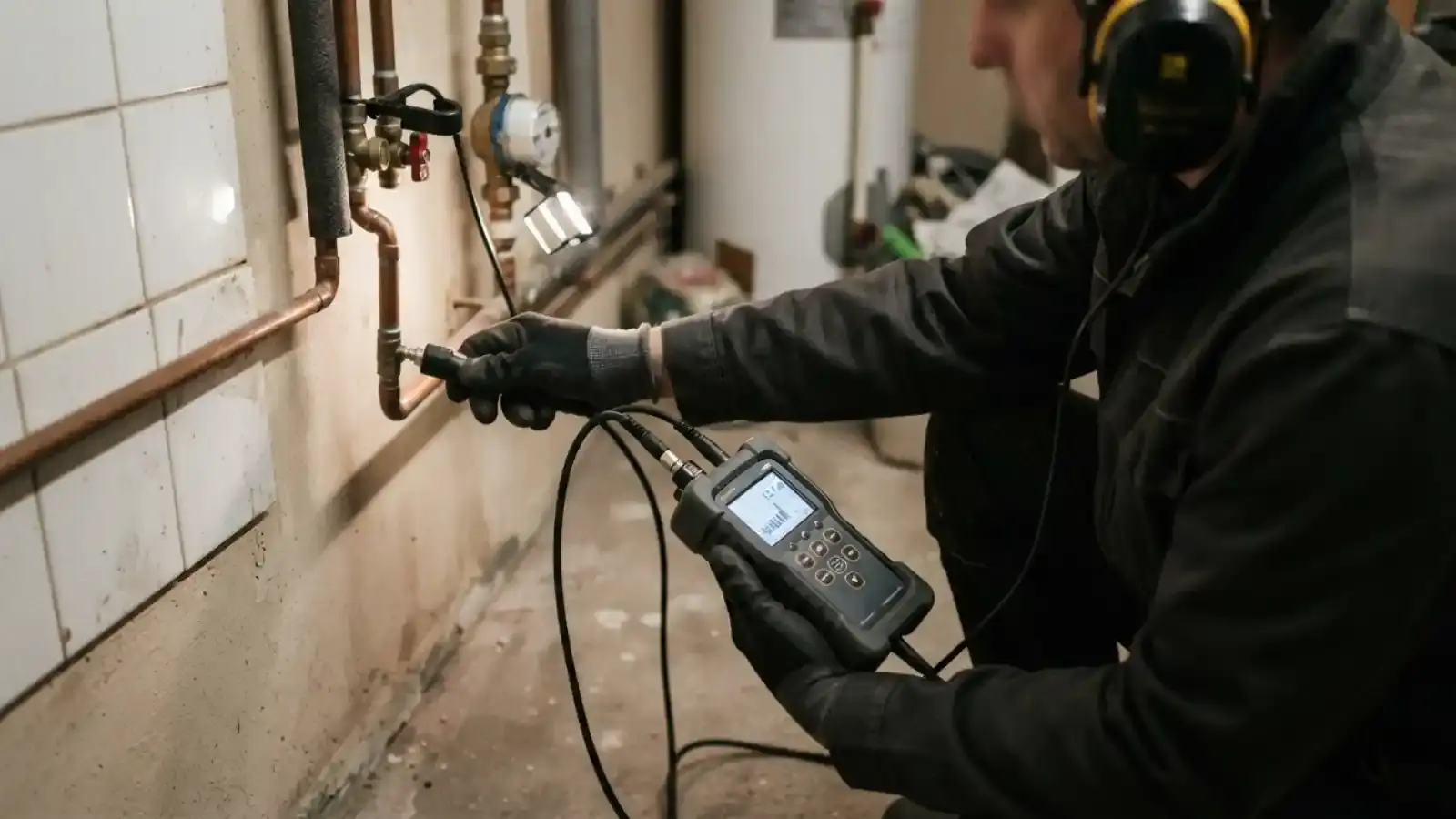
Callers often ask whether the company has the equipment to see through a wall or locate a pipe underground. The honest answer is that no single tool does everything. A plumber combines several and chooses by where the water is likely to be.
| Method | What it finds | Limits |
|---|---|---|
| Meter and pressure test | Whether a leak exists and which section of line holds it | Tells you a leak is present but not the exact spot |
| Acoustic listening gear | The hiss or vibration of water escaping from a pressurized pipe | Works best on a quiet pipe, and noise from traffic or pumps can mask it |
| Thermal imaging camera | Temperature differences from hot lines or wet material behind surfaces | Shows where to look rather than proving a leak on its own |
| Moisture meter | How far water has spread through drywall, wood and subfloor | Measures dampness, not the source |
| Tracer gas or dye | Hard-to-hear leaks in lines that listening misses | Adds setup time and is used when other methods are unclear |
| Pipe camera | Cracks, offsets and roots inside drain and sewer lines | Shows drain lines, not pressurized supply lines |
The plumber should explain which method was used and why. If a quote does not name the method, ask.
Ceiling, wall and attic leaks: following the stain back to its source
- Water shows up far from where it starts. Water follows pipes and framing before it appears as a stain. The wet spot on a ceiling is often a few feet from the real leak.
- A stain that appears only when someone showers. That pattern points to a drain, a shower pan or a tub overflow, not a supply line.
- A stain that grows when nothing is running. A pressurized supply line is the likely cause, so close the main valve and call.
- Brown rings that dry out and return. A slow leak that wets and dries leaves rings like a tree. It still needs finding, because the damage builds quietly.
- Attic or roof-line moisture. Sometimes the water is not plumbing at all. A plumber can rule plumbing in or out so a roofer is called for the right reason.
Under-house and crawlspace leaks
If your home sits on a raised foundation, the lines run in the crawlspace where nobody looks. A leak there can soak insulation, rot floor framing and raise humidity for months before a floor feels soft. Signs include a musty smell, a spongy section of floor, or a meter that runs with every fixture off.
Homes built on a concrete slab hide their lines in or below the slab, which changes the approach. The plumber listens and images from above, then explains whether access means cutting concrete or rerouting the line. That decision is covered in detail under slab leak repair. Pipe work in a crawlspace falls under the California Plumbing Code, Title 24 Part 5, which is based on the Uniform Plumbing Code (UPC).
Buried lines and irrigation: finding water in the yard
Water that leaks underground rarely announces itself. Look for a wet strip along a wall, a section of lawn that stays lush, a drop in water pressure, or a hissing sound near the meter box. A buried supply line, a garden hose bib line or an irrigation zone can all be the cause.
The plumber isolates sections of line with valves and pressure tests each one, then uses listening gear on the section that loses pressure. Irrigation leaks are separated from house leaks by shutting off the sprinkler supply first, which saves time and cost.
What a leak detection visit looks like
The visit is built to answer one question: where is the water going. You are told what will be done and what it costs before work begins.
- 01
Describe the symptoms
Tell the dispatcher about the meter, the bill, the stain or the sound, and when it started.
- 02
Hear the price method first
You are told how the visit is priced before anyone begins. Same-day appointments are offered when the schedule allows.
- 03
Narrow it down
The plumber tests the meter, isolates zones and uses listening, imaging and moisture tools to reduce the search area.
- 04
Mark and explain
The spot is marked, you are shown what was found, and the repair options are laid out. Many people ask the same plumber to do the repair, and that is offered.
What leak hunting looks like in Placentia homes
Placentia grew from about 5,000 people in 1960 to nearly 25,000 by 1970, so a large share of its homes are 1960s and 1970s tract construction with plumbing that is now past fifty years. Older Old Town and Atwood blocks are older still. Pipe that age tends to fail at joints and fittings, and a leak in one is common enough to check first.
Water in the Placentia and Yorba Linda area is on the hard side. Golden State Water reports an average hardness near 11 grains per gallon for its Placentia-Yorba Linda system, and scale can build inside pipes and fittings over time. Roughly a third of Placentia is served by Yorba Linda Water District, so check your bill to see which provider reads your meter.
If your provider flagged a possible leak, keep that notice handy and mention it on the call. Golden State Water customer service is 1-800-999-4033. For questions about whether a repair needs a permit, the city Building & Safety Division at (714) 993-8124 is the office to ask.
Safety steps while a leak is still unlocated
- Find the main shutoff. Know where the valve is and turn it off if water is visibly escaping or a ceiling is sagging.
- Stay clear of wet electrics. Do not touch outlets, switches or appliances near wet areas, and switch off the breaker only if the panel is dry and reachable.
- Do not poke a bulging ceiling. Trapped water can come down at once, so place a bucket under it and keep people out of the room.
- Note the meter reading. Write down the number and the time so the plumber can see how fast water is moving.
What drives the cost of finding a leak
People who call about leak detection ask about price more than almost anything else, and that is fair. A clear price is given before work starts. These are the factors that move it.
A small single-story home takes less time than a larger one with two floors or several bathrooms.
A fixture leak is quick to confirm. A line under a slab or buried in the yard needs more equipment and more time.
A meter test is simple. Thermal imaging, tracer gas and pressure zoning add steps.
Clear access to the crawlspace, attic and meter box shortens the visit.
If you plan to repair it yourself, you can ask for detection and a marked location only.
Many policies cover resulting water damage from a sudden leak but not the cost of finding or fixing the pipe itself, and wording varies. Ask your agent, and keep the plumber's written finding with the date as documentation.
Want a real number for your home? Call (714) 750-8637
Rentals, duplexes and small commercial buildings
Landlords and property managers call about leaks they cannot trace to one unit, and the same process applies. Meter checks per building, isolation valves and listening gear narrow it down without opening every wall. Larger or commercial lines are handled under commercial plumbing, and the plumber will tell you early if a building needs a different approach.
If you need the repair done too, say so on the first call so the visit is planned for both the finding and the fix.
Questions about leak detection in Placentia
Yes. The line at (714) 750-8637 is answered around the clock. Tell the dispatcher if water is spreading or a ceiling is failing so the call is treated as urgent.
Often yes. Acoustic gear, thermal imaging and moisture readings reduce the search to a small area, so the opening is small and in the right place.
It almost always is. Check the toilets and the irrigation first, then close the house main valve. If the meter keeps moving, the leak is on the line before the house.
Not to find it. Locating is done from above. Cutting or rerouting is a repair decision, and you are told the options before it happens.
Yes, if you want it. Some callers only want the location, and that works too.
Yes. Irrigation zones are shut off and tested separately so the house line and the sprinkler line are not confused.
Yes. The meter and isolation approach works for multiple units, and it keeps tenants in place while the source is found.