
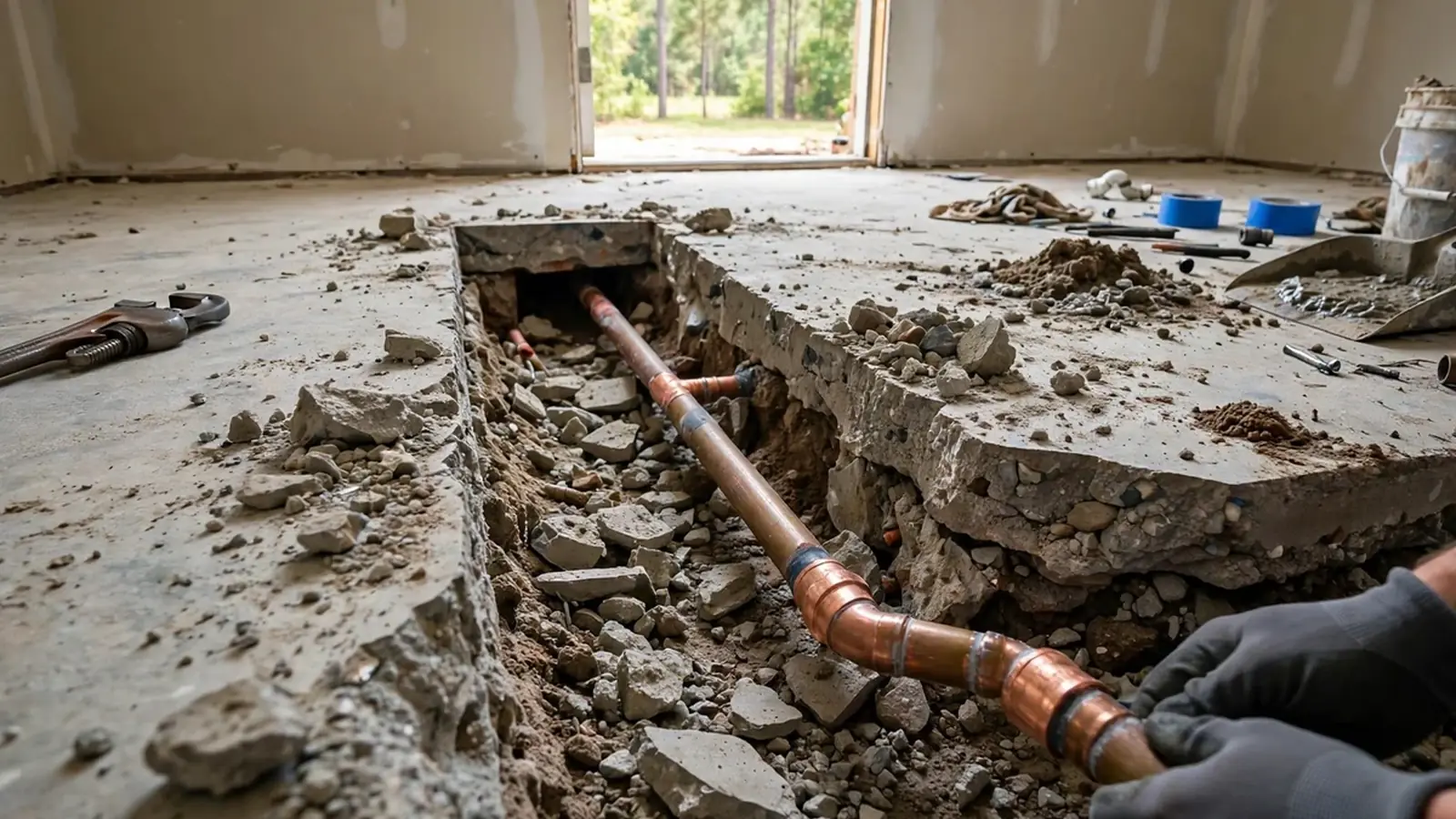
Emergency slab leak repair in Placentia, CA begins with locating the leak. The 24/7 line at (714) 750-8637 dispatches a licensed plumber who confirms the leak, pinpoints it from above, and explains the repair choices before any concrete is cut. Until then, shut off the main water valve and keep people away from wet floors.
A slab leak is a leak in a water line that runs under or inside the concrete foundation. Because the pipe is buried, the first sign is often indirect: a warm patch on the floor, the sound of running water, a damp baseboard or a bill that jumps. The repair sequence is locate, decide, fix, restore.
Signs that water is coming up through the floor right now
A slab leak is under pressure, so it does not pause overnight. Water escapes into the soil and can surface at flooring edges, door thresholds and baseboards. Time matters because wet subfloor and trim swell quickly.
Call at once if you notice any of these:
- A floor spot feels warm. A leak on a hot water line under the slab can warm the concrete above it. Bare feet find this before eyes do.
- You hear water running with every tap closed. A hissing or rushing sound from the floor or a wall means a pressurized line is open.
- Water appears at the baseboard or under flooring. Laminate that lifts, tile that cracks and carpet that squelches all point downward.
- The meter runs with the whole house off. That is the clearest measurable sign, and it is described step by step on the leak detection page.
Close the main valve, move rugs and furniture off the wet area, and call. Do not run the water heater if the hot side is the suspect, because it can keep feeding the leak.
Why pipes under a slab fail
Lines under a slab sit in contact with soil and concrete for decades. Over time they can corrode from the outside, rub against rough rock or concrete edges as the house settles slightly, or fail at a fitting that was fine when installed. Hot water lines tend to work harder because they expand and contract each day.
Water chemistry also plays a role. Golden State Water reports an average hardness near 11 grains per gallon in its Placentia-Yorba Linda system, which is on the hard side, and scale can narrow and stress pipe over a long period. That does not mean your pipe is failing, but it is one reason to have a plumber look when symptoms start. Any new section is run to the UPC, the model code behind California's Title 24 Part 5 plumbing code.
From the first warm spot to a dry floor
A slab leak repair follows a clear sequence, and each step is explained before it happens.
- 01
Confirm and isolate
The plumber checks the meter, shuts off sections of line and pressure tests to prove the leak is under the slab and not inside a wall.
- 02
Pinpoint from above
Listening gear and thermal imaging mark the spot on the floor, so any opening is small and in the right place.
- 03
Choose the repair route
You are shown the options, which can include breaking the slab at the spot, rerouting the line through walls and attic, or replacing the section.
- 04
Repair and pressure test
The line is repaired, tested and documented. Restoration of flooring and concrete is discussed so the scope is clear.
Three ways to fix a leak under the concrete
The best route depends on where the leak is, how many lines are failing and how the home is laid out. Ask the plumber to explain why one fits your case.
| Route | How it works | Worth thinking about |
|---|---|---|
| Spot repair through the slab | Concrete is opened directly over the leak and the pipe section is replaced | Fast for a single leak, but flooring over the spot is disturbed |
| Reroute through walls and attic | A new line is run overhead and the old slab line is abandoned | Avoids cutting concrete and suits homes with several leaks, but needs wall and ceiling access |
| Replace the failing line | A larger section is replaced when the pipe shows wear in many places | Addresses repeat leaks, and ties into repiping decisions for older homes |
Ask whether the repair includes restoring the floor surface or only the plumbing. Scope should be in writing before work starts.
Slab leaks that start somewhere else
- The water heater area. Callers often describe water at the edge of the slab near the garage or heater closet. A tank, a connector or the line feeding it can be the source, so the water heater repair page is worth a look.
- A drain, not a supply line. Damp but not warm floors with no meter movement can mean a drain or shower pan leak. A pipe camera sorts that out.
- Outdoor or driveway slabs. A line under a driveway or patio slab is found the same way, and cutting there is simpler than under finished flooring.
- A leak in the wall above. Water can run down a wall cavity and pool at the slab edge, which looks like a slab leak but is not.
What to do while you wait for the plumber
Close the main valve and leave it closed until the plumber says otherwise. Switch off the water heater at its control or breaker if the hot side is suspected, and move rugs, boxes and furniture off the wet floor so the flooring can start to dry.
Write down what you noticed and when, including the meter reading if you can see it. A short timeline helps the plumber narrow the search and gives your insurer a clear record. Do not drill or cut into the floor yourself, because a mistaken hole can hit another line or a cable and makes the finding harder.
If the floor is wet near a wall outlet, an appliance or the panel, stay out of the room. Water and electricity do not mix, and the plumber can make the area safe once on site.
Slab homes and older plumbing in Placentia
Placentia's population grew from about 5,000 in 1960 to nearly 25,000 by 1970, and tract homes from that era make up a large part of the housing. Many of these homes sit on concrete slabs. If your home dates from that growth, the supply lines under the slab are now in their later decades.
Which utility reads your meter depends on your address. Golden State Water covers much of Placentia and Yorba Linda Water District serves about a third, so check your bill. If your provider sent a leak alert, pass it along on the call. Ask the city Building & Safety Division at (714) 993-8124 whether your repair route needs a permit.
What changes the price of a slab leak repair
A clear price is given before work starts. These are the factors that decide the number.
A leak near an exterior wall or a garage slab is easier to reach than one under a kitchen or a main hallway.
Spot repair, rerouting and replacement carry different labor and materials.
One leak is a repair. Several leaks suggest the line itself is failing.
Tile, hardwood and carpet each change the restoration scope.
Furniture removal, protection of finished spaces and debris haul-off add time.
Home policies often cover resulting water damage but may not cover the cost of accessing the leak under the slab, and terms vary. Ask your agent before work begins and keep the plumber's finding, photos and invoice together.
Need a number for your slab? Call (714) 750-8637
Questions about slab leaks in Placentia
Yes. The line at (714) 750-8637 is answered around the clock. Say that water is on the floor or the meter is running so the call is treated as urgent.
A warm floor spot, a running meter with the house off and water at the baseboard point to the slab. The plumber confirms by isolating and pressure testing the lines.
Not always. Rerouting the line through walls and the attic avoids cutting the slab, and a spot repair only opens the concrete at the leak. You choose after hearing the options.
Usually yes, with the water off for part of the day. The plumber explains the timing and sets up water access where possible.
Plumbing and restoration are separate scopes. Ask what is included so there are no surprises.
Yes. Locating is its own step, and you hear the options before any cutting.