
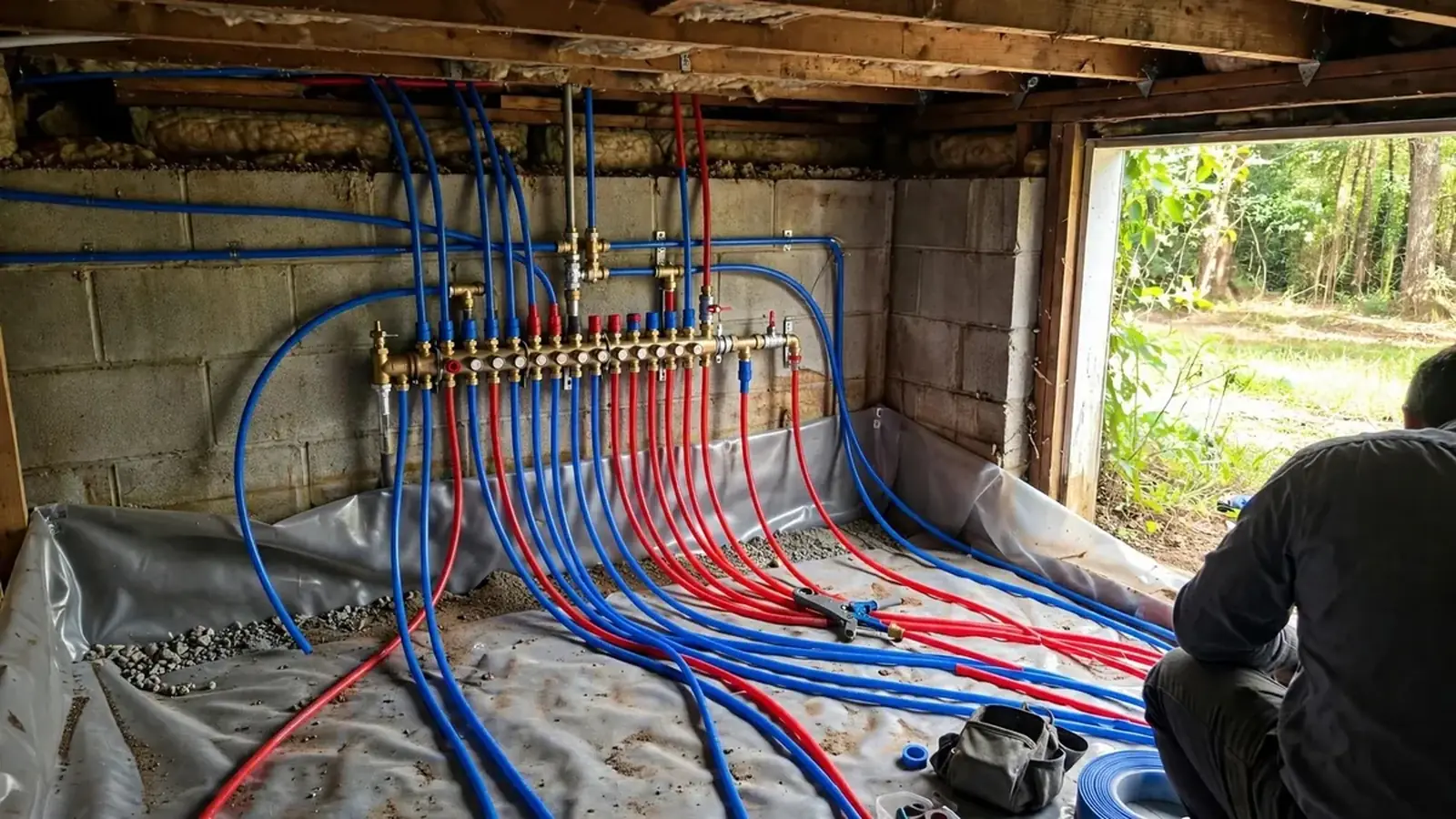
Many homes have more than one pipe material. Copper may feed fixtures while plastic carries drain water, and a repair or remodel often means joining the two. The joint is a small part of the plumbing system, but it is where leaks and code problems tend to start.
This guide explains why copper and PVC are not interchangeable, what transition fittings do, and where a mismatch can cause trouble. If you are planning a repair that mixes materials, or if you already see a leak at a joint, call (714) 750-8637 and a licensed plumber will take a look.
Why copper and PVC cannot just be joined
Copper and PVC expand and contract at different rates, and they are joined in different ways. Copper is soldered, brazed or joined with compression or push fittings. PVC is solvent welded with primer and cement. Cement will not hold on copper, and solder will melt plastic.
Joining the two needs a transition fitting designed for that purpose. It has one end made for copper and one end made for plastic, with a seal between them that is intended to hold under pressure and temperature change.
Pressure matters too. Supply lines run at pressure and may carry hot water. Drain lines run at gravity and carry waste. A plastic that is fine for a drain may not be accepted for hot supply, so the first question is always what the pipe is doing.
Where mixing materials is common and where it is risky
Not every copper to plastic joint is the same. The use of the line decides the right approach.
- Drain and vent lines. Copper drain stubs are sometimes joined to plastic drain pipe with a rubber or mechanical coupling made for that job. This is a routine repair when done with the correct fitting.
- Cold water supply. Transition fittings are used where copper meets a plastic supply material. The type of plastic must be one the code accepts for supply.
- Hot water supply. Heat is a stress on plastic joints, so the material and fitting must be rated for hot water. Ask a plumber which materials apply.
- Near the water heater. Fittings close to a heater face the highest temperatures, so the choice of materials needs extra care.
- Underground or inside walls. A leak in a hidden joint costs more to fix than one in a visible location, so the fitting quality matters more.
How a plumber makes a copper to plastic transition
The sequence is the same whether the job is a drain repair or a supply upgrade.
- 01
Identify both pipes
The plumber confirms the copper type and the plastic material, and checks which one the job actually needs.
- 02
Choose the transition fitting
A coupling or adapter rated for the use, pressure and temperature is selected. The fitting must match the pipe sizes on each side.
- 03
Prepare each end
Copper is cut square, cleaned and deburred. Plastic is cut, deburred and primed if it is solvent welded.
- 04
Make the joint and test
The joint is assembled, then the line is pressure tested or run under water to confirm there is no weep.
Pipe materials at a glance
This overview shows how common materials differ. Always confirm the exact product and its rating before use.
| Material | Typical use | Join method |
|---|---|---|
| Copper | Water supply, some drains | Solder, brazing, compression or push fitting |
| PVC | Drain, waste and vent | Solvent cement |
| CPVC | Hot and cold water supply | Solvent cement |
| PEX | Water supply | Crimp, clamp or expansion fitting |
Product ratings and code acceptance vary. Ask the plumber which materials are accepted for your job.
What to do when a joint leaks
A joint that weeps can fail suddenly. Mineral stains at a fitting or a damp spot under a cabinet are early signs.
Call (714) 750-8637 right away if you see:
- Water spraying or dripping from a joint. Shut off the main valve and keep the area clear.
- A green or white crust at a copper fitting. This means water has been escaping slowly for some time.
- A softened or discolored section of plastic pipe near a heater. Heat may be damaging it.
- A wet wall or ceiling with no obvious fixture above it. Hidden joints may be leaking, and burst pipe repair may be needed.
Turn off the water at the main valve while you wait and move anything that water could damage away from the area.
Permits and codes for pipe work in Placentia
California's plumbing code is Title 24 Part 5, based on the Uniform Plumbing Code. Which pipe materials are accepted for which uses is a code question, so do not rely on a general guide for your specific job. The City of Placentia Building & Safety Division at 401 Chapman Avenue, (714) 993-8124, is the office to ask.
Which joints and transition fittings are acceptable is set by the California Plumbing Code, Title 24, Part 5, which is based on the Uniform Plumbing Code (UPC).
The city's plumbing permit form lists water lines and pipe repair among its items, so a job that changes pipe may need a permit. A licensed plumber can tell you what applies, and a plumbing installation visit covers new lines and fixtures.
Questions about copper to PVC fittings in Placentia
No. PVC cement does not bond to copper. A transition fitting made for copper and plastic is needed, and the right one depends on whether the line is supply or drain.
Not in the usual sense. Standard PVC is not used for hot water, and other plastics are rated for it. Ask the Building & Safety Division at (714) 993-8124 or a licensed plumber which materials apply.
The city permit form lists water lines and pipe repair, so it may apply. Ask the Building & Safety Division, since the rules for your job depend on its scope.
The risk depends on the fittings and the water. Using a fitting designed for the transition reduces the risk, and a plumber can advise on options.
Not by itself. Many homes have mixed materials from past repairs. The concern is the joints, so a plumber looks at each transition.
Shut off the water at the main valve and call (714) 750-8637. The line is open 24/7 and a water line repair can be arranged.