
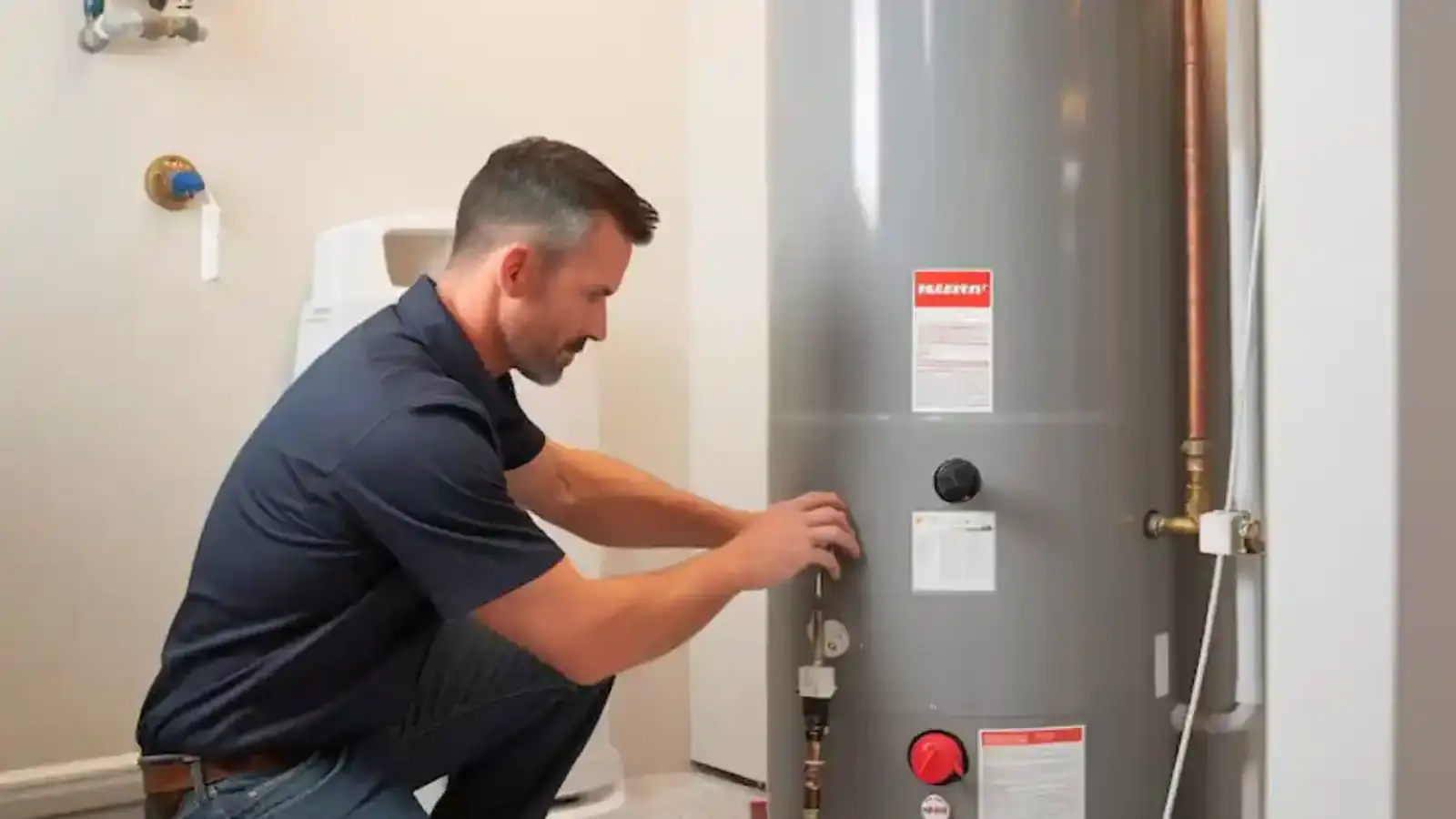
Installing a water heater is one of the most common big plumbing jobs in a Placentia home, and also one of the easiest to get wrong. The tank has to be level, braced, vented correctly, connected to gas or power, and fitted with a relief valve that discharges safely.
This guide walks through what the work involves, where the risk is, and what to ask before anyone starts. It is written for homeowners who want to know what a good install looks like, whether they hire it out or just want to understand the quote.
What an installation actually includes
A water heater install is more than setting a new tank where the old one stood. These are the pieces a complete job covers.
- Shutting off and draining the old unit. Gas or power is turned off, the cold supply is closed, and the tank is drained to a safe spot. Water in the tank can be scalding hot.
- Removing and disposing of the old heater. A full tank weighs a great deal, and a second person is often needed to move it.
- Setting and leveling the new unit. It sits on a stable base or pan, with space around it for service.
- Connecting water, gas or power. Flexible connectors and shutoff valves are installed, and gas connections are leak tested before the unit runs.
- Venting and the relief valve. Gas heaters need a proper vent path for exhaust, and every tank needs a temperature and pressure relief valve piped to a safe discharge point.
- Seismic bracing. California requires water heaters to be braced against earthquakes, and a good installer does this as part of the work.
When to call a licensed plumber for a water heater install
Gas appliances can leak or vent exhaust into the home when connections or vent paths are wrong. A relief valve that is capped or piped to nowhere turns a heater into a pressure hazard. A tank that is not braced can topple in an earthquake and rupture a gas line.
None of these risks are exotic. They are the reason inspectors look at water heaters first. If you are unsure whether you are comfortable with any of the steps above, the safe answer is to hire it out. A licensed plumber handles the connections, tests them and can talk through the permit question.
If your current heater is already failing and you want to know whether to fix or replace it, the water heater repair page explains how to tell the difference.
Gas, electric and tankless at a glance
Before you install, decide what kind of heater you are installing. The choice changes the work on the day.
| Type | What the install needs | Watch for |
|---|---|---|
| Gas tank | Gas line, vent, relief valve, water connections | Correct venting and a leak test on the gas connection |
| Electric tank | A dedicated circuit, relief valve, water connections | The existing circuit must match the new unit |
| Gas tankless | Gas line sized for the demand, a venting path, water connections | Gas line capacity and the condition of the vent |
| Electric tankless | A heavy electrical load and a suitable panel | Panel capacity may require electrical work |
The tankless water heater page covers that choice in detail.
How a good install runs from start to finish
Whoever does the work, this is the order of a clean installation.
- 01
Assess and quote
The plumber checks the location, the fuel, the venting and the existing connections, then gives a clear price before starting.
- 02
Prepare the site
The area is cleared, the old tank is shut off and drained, and the new one is staged.
- 03
Set and connect
The new heater goes in, connections are made, the relief valve is piped, and the unit is braced.
- 04
Test and explain
The system is filled, checked for leaks, fired and tested. You are shown the shutoff valves and the temperature setting.
Installing a water heater in Placentia
The City of Placentia Building and Safety Division, at 401 Chapman Avenue and (714) 993-8124, uses a permit application that lists water heaters among its items. Ask the city whether your replacement needs a permit, and ask the plumber what they normally see. Fees are the city's, so we do not quote one.
In California the work is judged against the California Plumbing Code, Title 24, Part 5, which is based on the Uniform Plumbing Code (UPC), so ask your plumber how the install will meet it.
California Health and Safety Code section 19211 requires water heaters to be braced against earthquakes, which is a practical concern in Southern California. Placentia homes are also fed by water that Golden State Water reports at an average of about 11.0 grains per gallon of hardness, so scale is a real long-term factor for any new tank.
Golden State Water and Yorba Linda Water District both serve parts of Placentia, so check your bill to see which one is yours. Nearby, the Yorba Linda plumber page covers the neighboring city and its ZIP codes.
Ask these questions before you accept a quote
A good quote is specific. It states the heater type and capacity, the venting and gas work, the relief valve and discharge pipe, the bracing, and who handles any permit. If one of those is missing, ask.
You should also ask what happens to the old tank, whether the work comes with a written scope, and whether the price changes if the plumber finds a problem behind the wall. A clear price before work starts means the answer to the last question is that you are told first.
If a heater has already failed and you have no hot water, the water heater replacement page explains the urgent route, and the line at (714) 750-8637 is open 24/7.
Mistakes that shorten a new heater's life
- Skipping the relief valve discharge pipe. The valve has to drain somewhere safe, and the pipe should never be capped.
- Leaving the tank unbraced. It is a legal requirement and a safety one.
- Ignoring hard water. Scale builds up faster in hard water. Flushing the tank on a schedule and considering a softener both help.
- Setting the temperature too high. Very hot water raises scald risk and speeds scale. Ask the plumber to set it and show you.
Water heater installation questions in Placentia
The city permit application lists water heaters, so many replacements do. Call Building and Safety at (714) 993-8124 to confirm for your specific job.
Yes. California Health and Safety Code section 19211 requires bracing against earthquakes, and a licensed installer includes it.
A straight swap of the same type is often done in a single visit. Changing fuel, moving the heater or adding venting takes longer, and the plumber explains the window first.
Golden State Water's 2026 report lists an average of about 11.0 grains per gallon, with a range up to 17.5. That is enough for scale to build up, so ask about flushing and softening.
Call (714) 750-8637 any hour. A licensed plumber can be dispatched, and the quote is clear before work starts.