
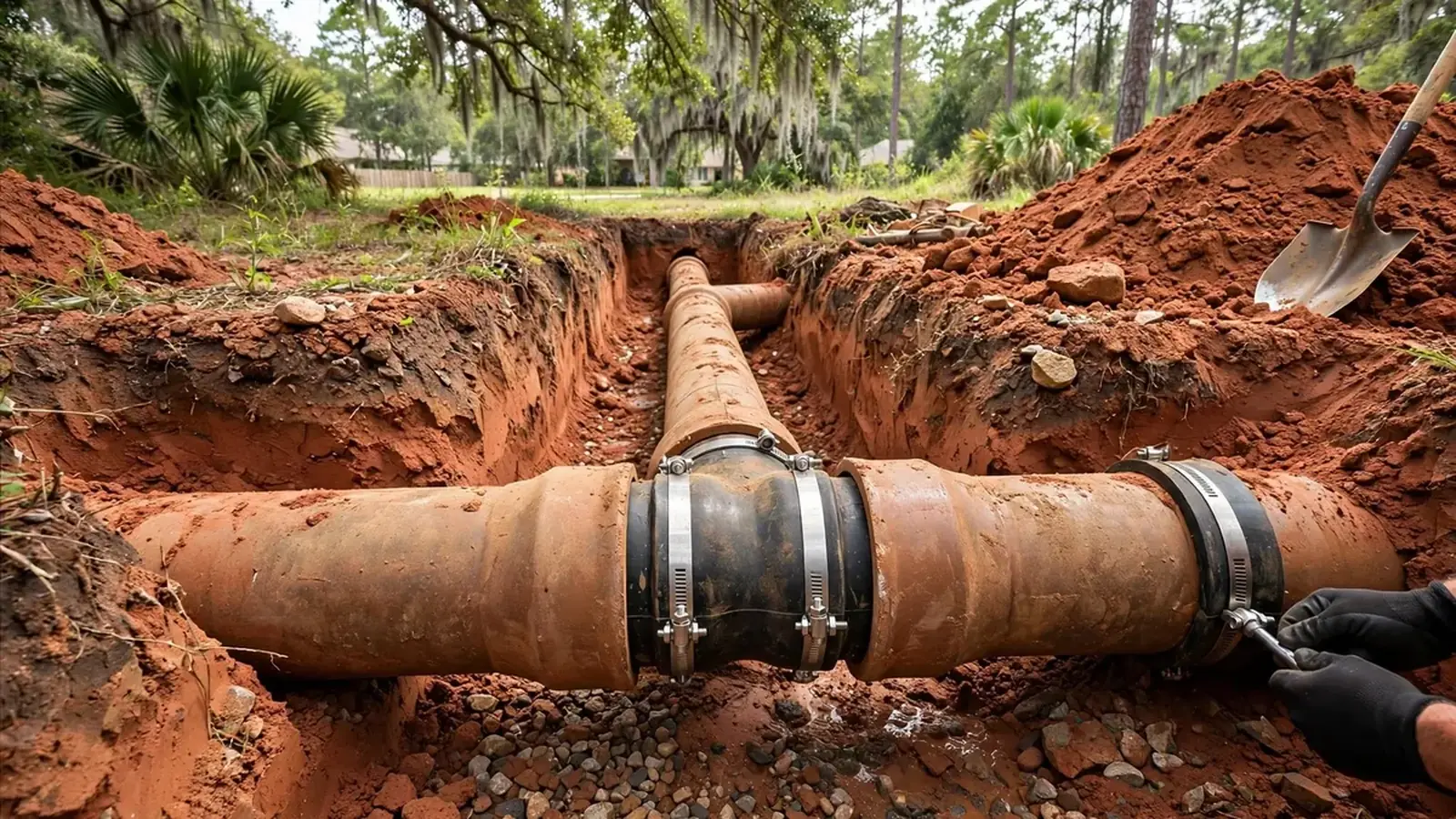
Cast iron was a standard material for home drain and waste lines for much of the twentieth century. In a house that has not had its drain lines replaced, there is a fair chance some of the pipe under the floor or in the walls is cast iron. It is heavy, quiet when water runs through it, and tough, but it corrodes from the inside over time.
This guide explains how to spot cast iron, what its failure signs look like, and how plumbers decide between cleaning, lining, spot repair and replacement. If you are seeing slow drains, sewer smells or stains on a ceiling below a bathroom, call (714) 750-8637 and a licensed plumber will take a look.
How to tell whether you have cast iron
Cast iron drain pipe is usually dark gray or black, heavy, and rust-colored where it has been wet. Tap it with a metal object and it gives a dull thud rather than the hollow ring of plastic. A magnet sticks to it, which separates it from copper and plastic lines.
Look where pipes are visible: in a crawlspace, a garage wall, under a first-floor bathroom, or at the cleanout near the foundation. If the pipe is 3 or 4 inches wide, gray, and joined with bands or with lead and oakum at the hubs, it is almost certainly cast iron.
If you cannot see any drain pipe at all, a plumber can confirm the material with a camera through a cleanout or a fixture opening.
Signs that cast iron is wearing out
Cast iron fails slowly and the symptoms tend to repeat. These are the patterns plumbers see most often.
- Repeat slow drains. Rust scale builds up inside the pipe wall and narrows the path, so hair and paper catch more easily.
- Sewer smell with no obvious source. Pinholes, cracked hubs or failed joints can let gas escape inside a wall or crawlspace.
- Stains or soft spots below a bathroom. A leaking drain stack or horizontal run can soak drywall or a subfloor over time.
- Gurgling when a fixture drains. A partly blocked line pulls air through traps, which makes the noise.
- Visible rust flaking, weeping joints or cracks. A flashlight inspection at the exposed sections often shows this first.
Repair, line or replace: the options
The right choice depends on how much of the pipe is worn and whether the damage is localized. A camera inspection is the starting point for each option.
Clean and monitor
If the pipe is intact but scaled, hydro jetting can scour the wall and restore flow, and the plumber advises how often to repeat it.
Spot repair
A cracked section or failed joint can be cut out and replaced with new pipe and couplings, leaving the rest in service.
Pipe lining
A resin liner is cured inside the existing pipe to form a new wall. It suits long runs where digging is hard and the pipe has not collapsed.
Full replacement
When the pipe is deeply corroded or offset, replacing it with new material is the lasting fix, and the plumber will plan access to limit wall and floor damage.
Each option has trade-offs in cost, disruption and lifespan. Ask for the camera footage so you can see what the plumber sees.
What a cast iron inspection looks like
Inspection is the least invasive step and the most useful for planning.
- 01
Locate access
The plumber finds the cleanout, a vent stack or a fixture opening to feed the camera line.
- 02
Run the camera
The camera is pushed through the pipe and shows scale, cracks, offsets and roots as it goes.
- 03
Mark the problem spots
A locator marks the depth and position of any damage on the floor or ground above it.
- 04
Review and quote
You see the footage, hear the options, and get a clear price before work starts.
What to do when a drain stack leaks
A drain line that has failed behind a wall or under a slab can leak wastewater for days before it shows. If you see wet drywall, a bubbling floor, or sewage odor, shut off the water to the affected fixtures and call the 24/7 line at (714) 750-8637.
For active water or sewage damage, the sewer line repair page explains how a repair is scoped.
Why older Placentia homes matter for pipe material
Placentia was incorporated in 1926 and grew quickly, from about 5,000 residents in 1960 to nearly 25,000 by 1970. A large share of the housing built in that growth period is now 50 years old or more, and the neighborhoods around Old Town and Atwood are older still. Homes of that age may still have original drain lines, so it is worth checking what you have.
Replacement drain pipe is installed to the California Plumbing Code, Title 24, Part 5, which draws on the Uniform Plumbing Code (UPC).
If you plan a repair or replacement, ask the City of Placentia Building & Safety Division at (714) 993-8124 whether the work needs a permit. The city's plumbing permit form lists pipe repair among its items. For homes near Yorba Linda, the Yorba Linda plumber page covers service in that area.
Questions about cast iron pipes in Placentia homes
It is far less common in new residential work, where plastic drain pipe is widely used. Many plumbers still install cast iron in specific cases such as noise control, so the answer varies by project.
There is no single number. Lifespan depends on water chemistry, how often the pipe is used, soil and moisture around it, and the quality of the original installation. A camera inspection shows the actual condition.
Homes from the mid-century growth years may. Placentia grew from about 5,000 to nearly 25,000 residents between 1960 and 1970, so many homes are old enough for original drain lines. A cleanout or crawlspace check will tell you.
Often yes. Spot repairs, cleaning and lining are all options when the pipe is mostly sound. A camera inspection decides which one fits.
Ask the Building & Safety Division at (714) 993-8124. The city permit form includes pipe repair, and the division can tell you what applies to your job.
Shut off water to the affected fixtures and call (714) 750-8637. The line is open 24/7 and a licensed plumber can be sent.