
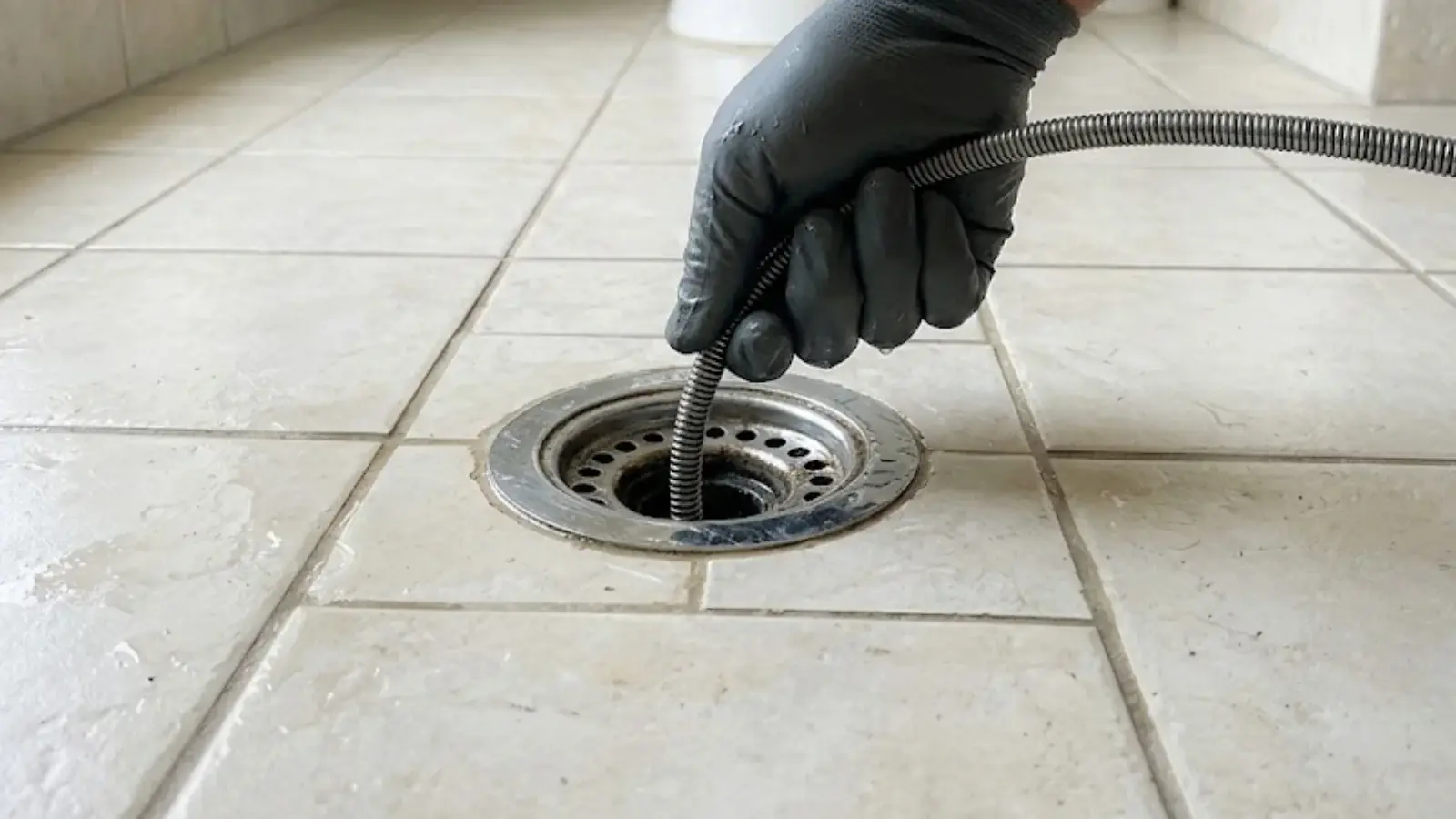
Pouring bleach into a clogged drain is a common reflex, and it rarely works. Bleach is a disinfectant. Clogs are made of hair, grease, soap scum, paper and sometimes roots, and bleach does not break most of those down in the minutes it sits in the pipe.
Worse, a pipe full of standing bleach is a hazard for the next person who opens it. This guide covers what bleach does and does not do, the cleaners that must never touch it, and the safer steps to take first. If water is rising or a fixture is overflowing, call (714) 750-8637 at any hour.
What bleach does to a clog
Household bleach is a dilute solution of sodium hypochlorite. It kills germs and lightens stains, which is why it feels right for a smelly drain. It does not dissolve hair or hold-together grease, and it has little effect on a ball of wet paper.
A drain that is fully blocked also keeps the bleach where it was poured. The liquid sits on top of the clog, does little to it, and then sits in the trap and the fixture. The next step is usually someone reaching in with a cable or a wrench.
A slow drain may improve for a day because the water is warmer or the surface film has loosened. That is not a repair, and the clog usually returns.
Never mix bleach with another drain product
The real danger is what happens when one cleaner follows another. Two products that are safe alone can release toxic gas together, and a clogged drain is a place where leftovers linger.
Keep these combinations in mind before pouring anything:
- Bleach and ammonia. Many glass cleaners and some urine-based odors contain ammonia. Together they release chloramine gas, which irritates the lungs.
- Bleach and acid products. Toilet bowl cleaners and some drain openers are acidic. Mixed with bleach they release chlorine gas.
- Bleach after a chemical drain opener. Even if the first product seemed to do nothing, it may still be in the pipe. Do not add another.
- Anything in a closed room. If a smell burns the nose or eyes, leave, open windows if you can do so safely, and keep children and pets away.
If someone feels dizzy or has trouble breathing after mixing cleaners, move to fresh air and call 911. A plumber should not be the first call in that case.
What to try before any chemical
Most household clogs respond to something mechanical. These steps cost almost nothing and carry no gas risk.
- Remove the strainer or stopper. Hair collects there and just below. Pulling it out with a gloved hand or a plastic drain tool solves many slow tubs.
- Use a plunger with a good seal. A cup plunger on a sink or tub needs standing water above the cup, and the overflow opening plugged with a wet cloth.
- Flush with hot water. Not boiling water on old plastic or porcelain, which can crack. Hot tap water softens a light grease film.
- Clean the trap. Place a bucket under the curved pipe, loosen the slip nuts, and clear what comes out. Reassemble and run water to check for drips.
- Stop using the fixture. Each use sends water into a pipe that may be backing up. If the problem is the toilet, shut the supply valve and wait for help.
Bleach compared with what actually clears a drain
The right choice depends on the kind of blockage. The plumber's tools are built around those differences.
| Blockage | Bleach | What works |
|---|---|---|
| Hair in a tub or shower | Little effect | Pulling the hair out, or a small cable |
| Grease in a kitchen line | Does not dissolve it | Hot water for a light film, a cable or jetting for a heavy one |
| Wipes or paper in a toilet line | No effect | A closet auger or a machine cable |
| Tree roots in a main line | No effect on roots | A cutting head, then a camera, and repair if the pipe is broken |
| Odor from a dry trap | May mask it briefly | Running water to refill the trap, or finding the leak |
When to call a plumber and stop the bleach
Call when more than one fixture is slow, when the toilet gurgles while another fixture drains, or when a floor drain smells like a sewer. Those signs point to the main line, and no household product reaches that far.
A repeat clog is also a call. If the same drain stops every few weeks, a camera inspection can show whether grease, roots or a damaged pipe is behind it. Drain cleaning clears the line, and hydro jetting scours buildup off the pipe wall when a cable only punches through it.
Tell the dispatcher what you have already poured down the drain. The plumber needs to know before opening the trap or working with a machine, so the product is not a surprise.
Placentia pipes, the city sewer and hard water scale
The City of Placentia says its sanitary sewer system is roughly 50 to 100 years old, with about 84 miles of gravity sewer pipe. Many houses connect to that system through aging laterals. A repeat clog that a cable does not cure can sit in the lateral or at the connection, and household chemicals do nothing there.
Pipe sizes and slopes that decide how a drain behaves come from the California Plumbing Code, Title 24, Part 5, which is based on the Uniform Plumbing Code (UPC).
If a camera shows the blockage is in the city main, Public Works at (714) 993-8131 is the office to call. Who owns the lateral is a question for Public Works, since the city does not state it on its sewer page.
Water hardness adds to the problem. Golden State Water reports an average of 11.0 grains per gallon for its Placentia and Yorba Linda system, and Yorba Linda Water District serves about a third of Placentia, so check your bill. Hard water scale narrows pipes over time and gives grease and hair a rough surface to cling to.
Bleach and drain questions in Placentia
Usually not. A toilet clog is paper, waste or a foreign object, and bleach does nothing to them. A plunger or a closet auger is the standard first step.
In small amounts and rinsed well it is generally tolerated, but strong or repeated doses can wear rubber seals and some fittings. It also does not fix the clog, so the damage is not worth the risk.
A home on the city sewer has no tank to harm. A home on a septic system should ask a septic professional before adding bleach, since it can upset the bacteria the tank depends on.
Say which products were used and how long ago. The plumber can then wear the right gloves and eyewear and avoid splashing a standing chemical when opening the line.
Yes. The line at (714) 750-8637 is answered 24/7, and nearby cities such as those on the Yorba Linda plumber page are covered too.